
Nose Fork Assemblies

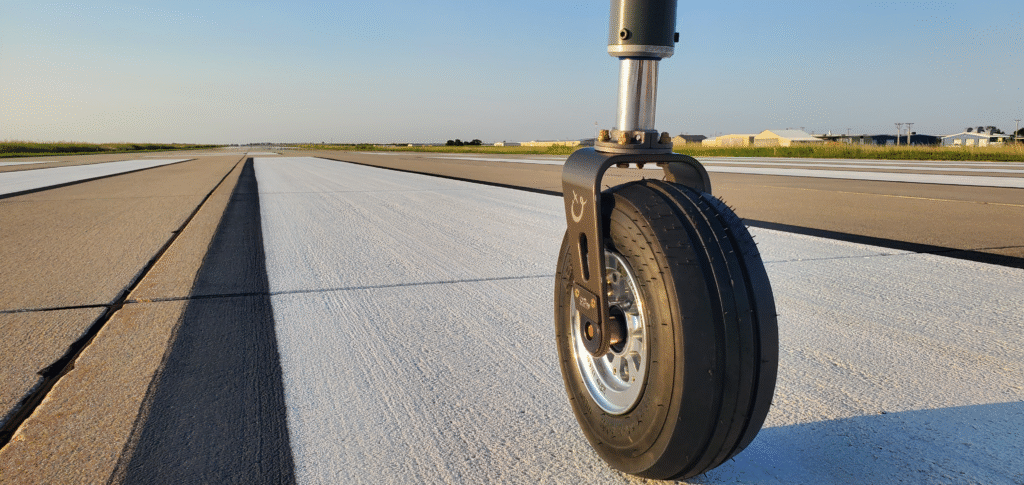
This project took far longer then I had ever anticipated. . .
Some History
Lancair went through numerous designs for the nose forks on early 235 and then 320/360 airframes. The first, and I believe all, 235 model kits initially left Lancair without a nose strut, these had a castering fork similar to Lance’s original 200 design. These kits still pop up occasionally with this configuration.
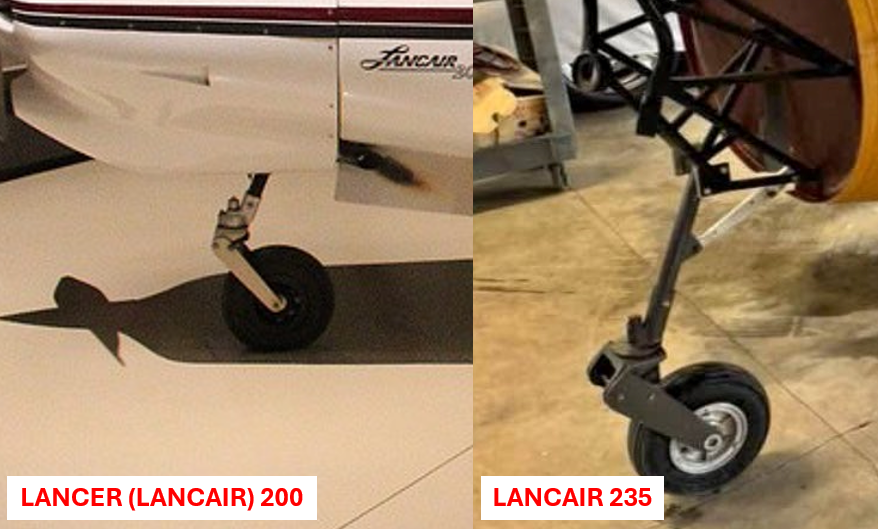
The castering design proved troublesome and ultimately drove the introduction of the Esco built oleo strut. These were put on all 320 and 360 aircraft and a similar version was created for the 235 as a retrofit. I’m sure there are some but I’m unaware of any 235 aircraft flying that still use the castering nose gear.
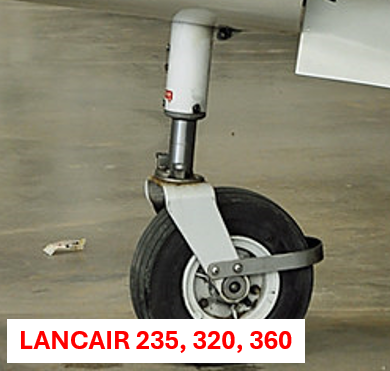
The newer Esco strut incorporated a nose fork design similar to that of many other aircraft, being bent from a piece of flat aluminum. Lancair made several small changes to the thickness and shape of the fork over time to increase its strength. Early forks were under 0.3″ thickness and proved to bend quite easily, later ones were closer to 0.32″ which made them better suited and matched to the strength of the fastens and strut. These were held on using AN4 (1/4″) bolts. The configuration worked well.
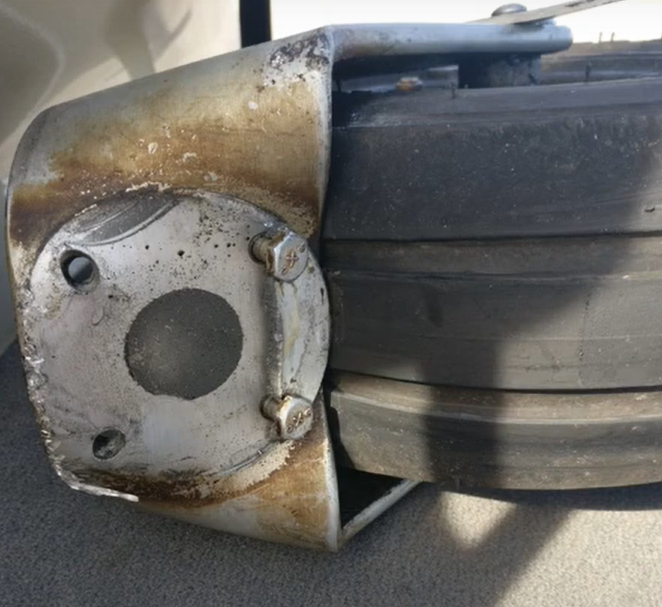
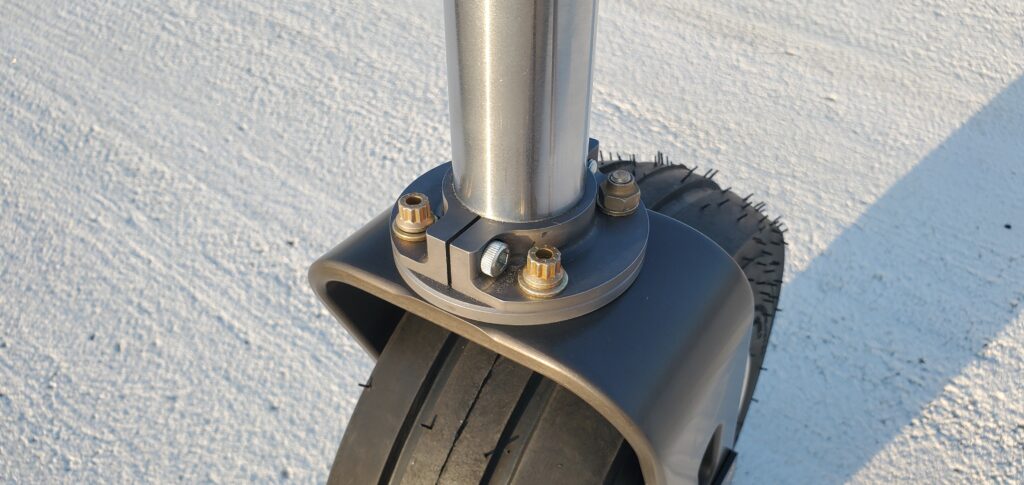
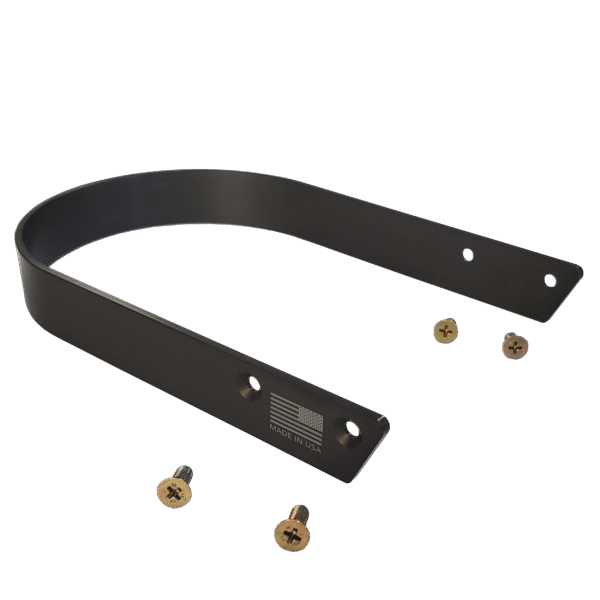
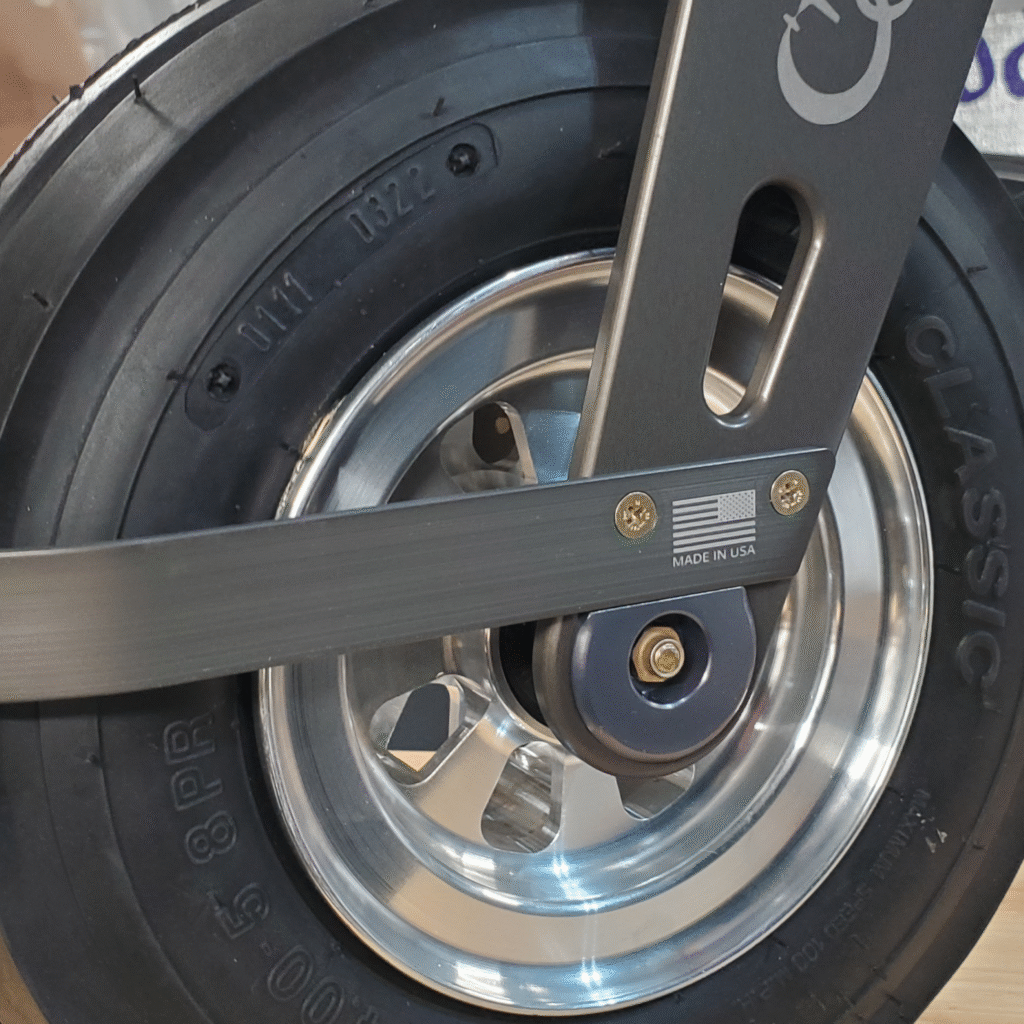
The “hoop”, shown wrapping around the back of the tire in the photo above, is necessary with earlier struts as it guides the wheel into the gear well. It also stopped the axle from rotating by keying with a flat in the axle bushing. At one point the Esco nose struts were changed to have a self centering feature, this allowed the hoop to be swapped to smaller retaining plates which only prevented rotation of the axle. While unnecessary, many 320/360 aircraft with self centering struts still have hoops. Below is a Legacy with the hoop-less type design.
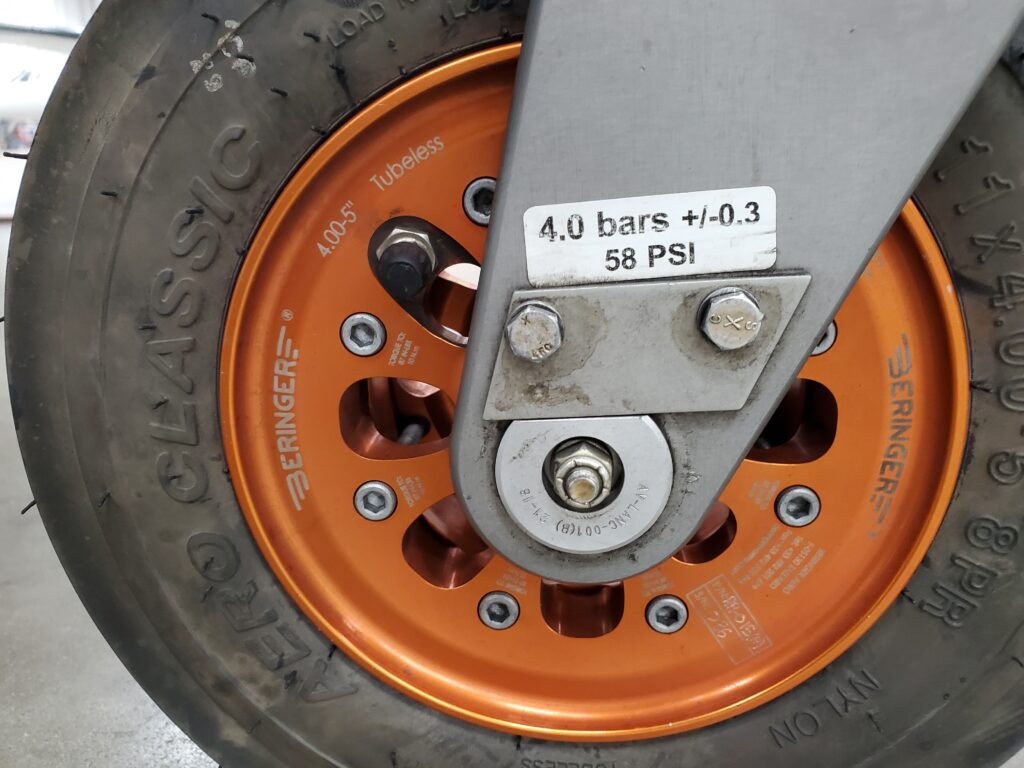
Later the axle and retaining plates were revised so that the plate also retains the axle axially. This helps “slightly” in distributing side loads to both halves of the fork.
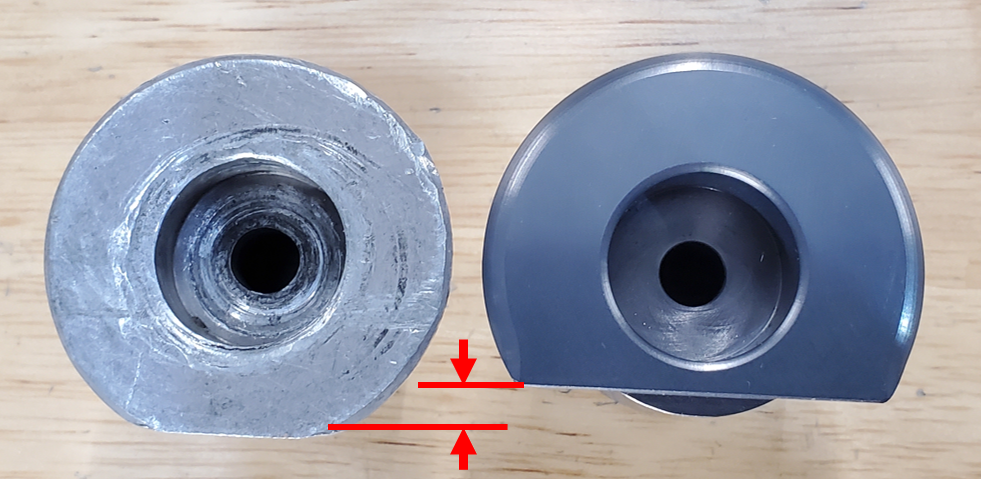
Due to this change alot of these parts are incompatible with each-other, the right combination is required. Hoops were never produced that were compatible with the axial retaining design. Below is an example of an incompatible combination, note how the axle can freely spin and is not retained by the hoop axially either. This “works” for a time but its not ideal.
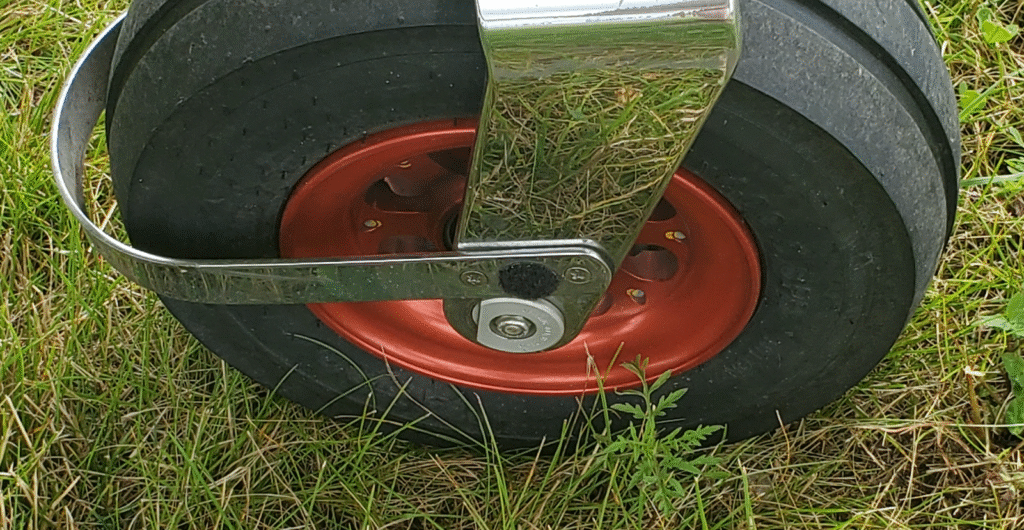
When the Legacy was introduced the fork thickness was quickly increased to account for the added weight on the nose. These initial aircraft still used AN4 bolts to secure the fork to the strut. Shortly after Lancair increased the size of these bolts and changed the bolt pattern slightly, most Legacy’s now having AN5 bolts securing the fork to the strut. Technically Lancair’s manual still specifies AN4 bolts for the Legacy RG. For the Legacy FG however they do specify the larger, but higher strength bolt, MS21250-05, which is what really should be used on all Legacies instead of the AN5 fasteners commonly seen.
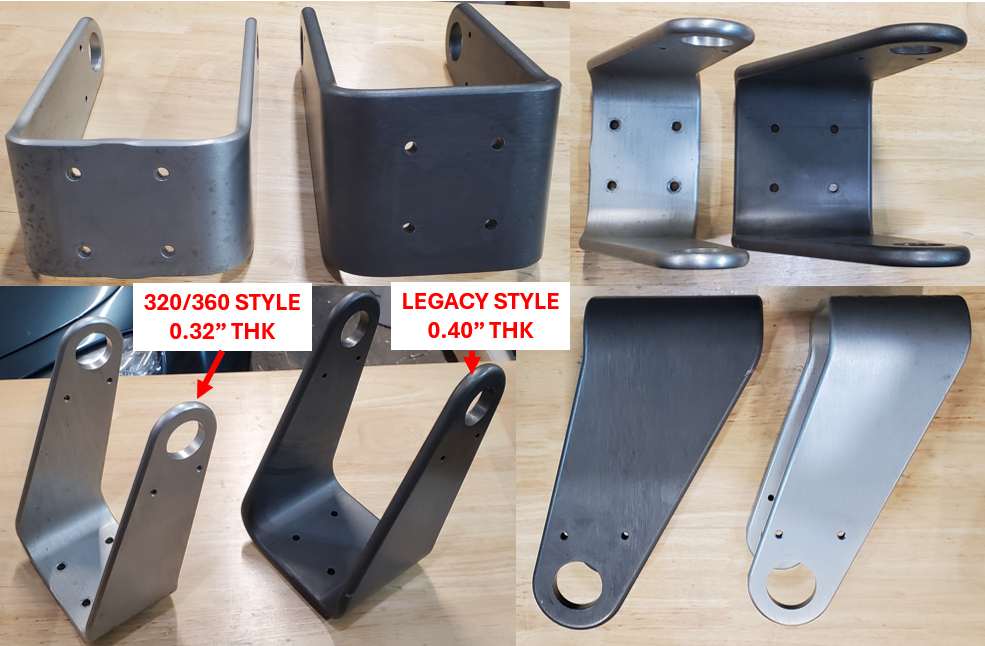
The Legacy fork design stabilized with a thickness of around 0.4″ and a much larger shape, these forks weigh in at a whopping 2.2lbs and can be identified by their size relative to the strut flange, they stick out around 1/2″ forward and aft. Instead of continuing to make the original 0.32″ thick forks Lancair superseded them by the thicker legacy fork but drilled for the smaller AN4 bolts. This thicker fork was all that was available from Lancair after the early-2000’s so many 235, 320, and 360 airframes are currently using this thicker fork along with AN4 bolts.
Can It Be Too Strong?
The earlier fork designs, thinner than 5/16″, have been known to bend easily and probably should not be used. The 0.32″ thick forks are also susceptible to bending during a hard landing, however as will be shown, there is not much benefit to adding additional strength to the fork to prevent this. A typical bent fork is shown below, courtesy of Joe Williams who shared his experience on youtube.
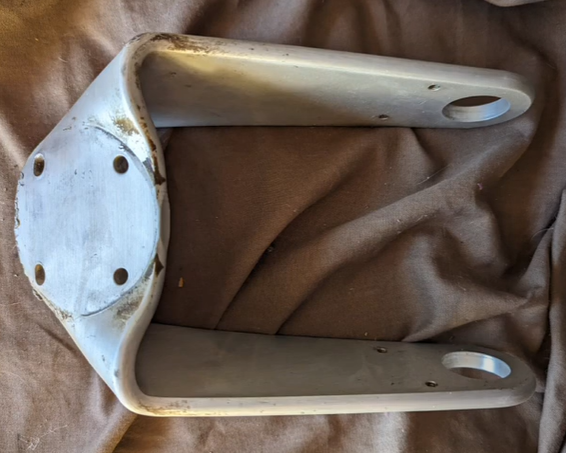
Distortion is actually part of the design intent and can be better than the alternative. By distorting the nose fork is able to dissipate a considerable amount of energy which results in less loading on the strut and other landing gear components. This is the same reason modern cars are designed with crumple zones. A fork which is too strong does not deform and transfers all of these loads to these more expensive and difficult to replace components which may completely fail (immediate propeller strike) rather than bend. The ideal design meets the load requirements but bends before significant damage is caused to other components.
This is where the Legacy fork design has problems on a 235, 320, or 360. Since it is so strong it does not distort easily. On these airframes the first weakest link is actually the AN4 bolts securing the fork, these are known to break off when the fork is overloaded, resulting in a prop strike and considerable damage to the strut. One can only assume this issue is why the Legacy was equipped with 5/16 size fasteners and a thicker strut flange. Besides distorting the thinner 360 strut flange, the strong fork also can allow bending of the chrome strut rod, an expensive repair.
That’s not to say that the 0.32″ forks can’t break the 1/4″ bolts off, they can, but it only happens after considerable deformation of the fork such as in Joe’s example.
As the fork bends backwards the load on the front bolts increase due to the increased lever arm. This problem can be significantly improved with higher strength fasteners.
Nose Fork Testing & Improvement
I wanted to design a fork to replace the originals, slightly stronger than the 0.32″ forks, lighter than the 0.40″ forks, but still able to distort under load to prevent premature damage to the strut, propeller, and engine. It is this aspect which added considerable R&D effort.
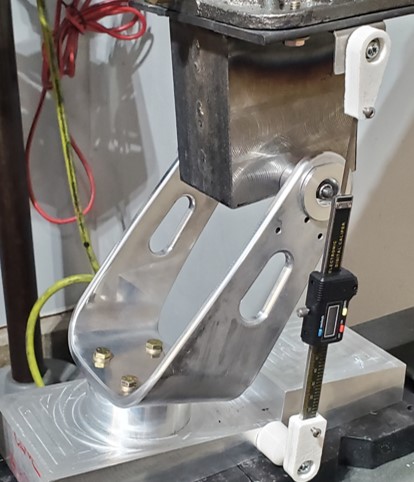
To start, I built a test rig which would allow me to simulate vertical loads on the fork oriented as in the FAR requirements for nose gears. This setup measured the force applied and also the displacement of the fork which allowed for some pretty graphs which clearly describe the elastic and plastic deformation regions of the various designs.
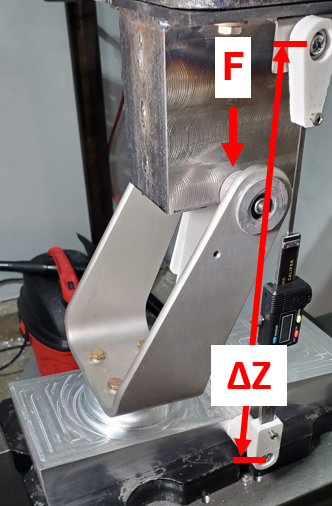
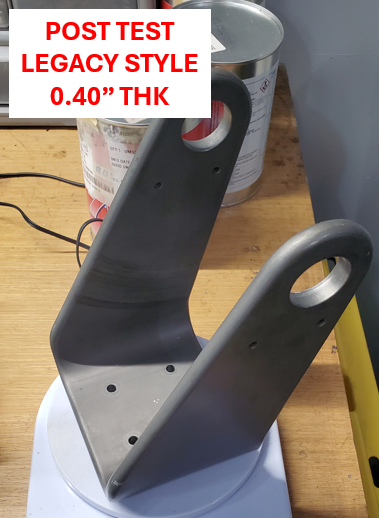
To get a baseline I tested the original 0.32″ thick fork and “Legacy” 0.40″ thick fork first.
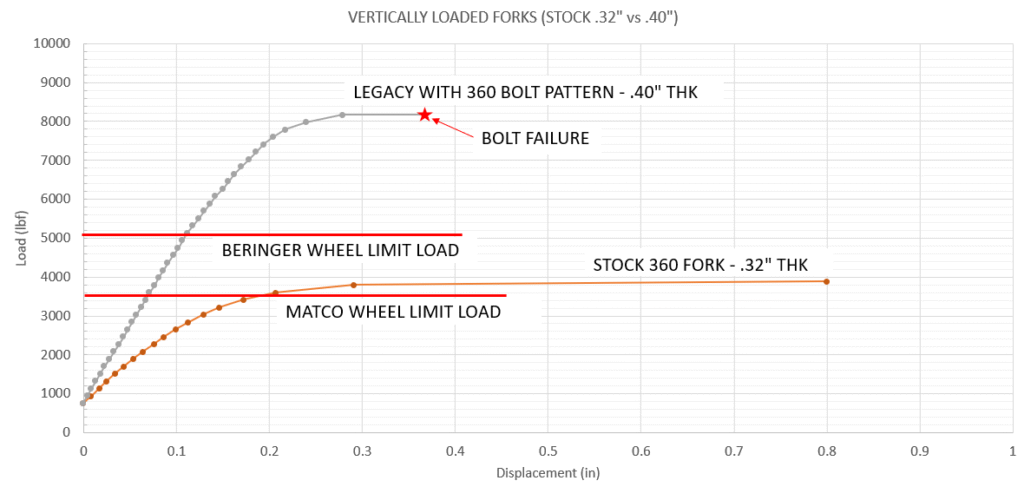
Do not take the numbers in the chart to be precisely accurate, the test setup is uncalibrated and comparative in nature which is adequate to explore the differences between the designs. Also, technically I used grade 8 bolts for this test, an AN4 fastener would have behaved similarly in the field, maybe slightly poorer as they “generally” have lower tensile strength.
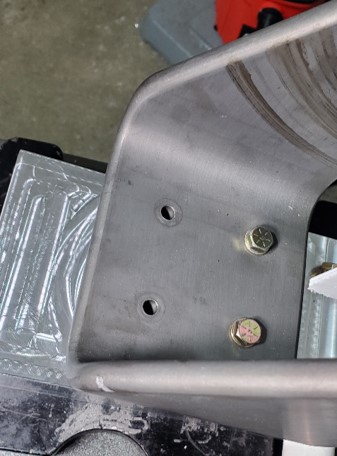
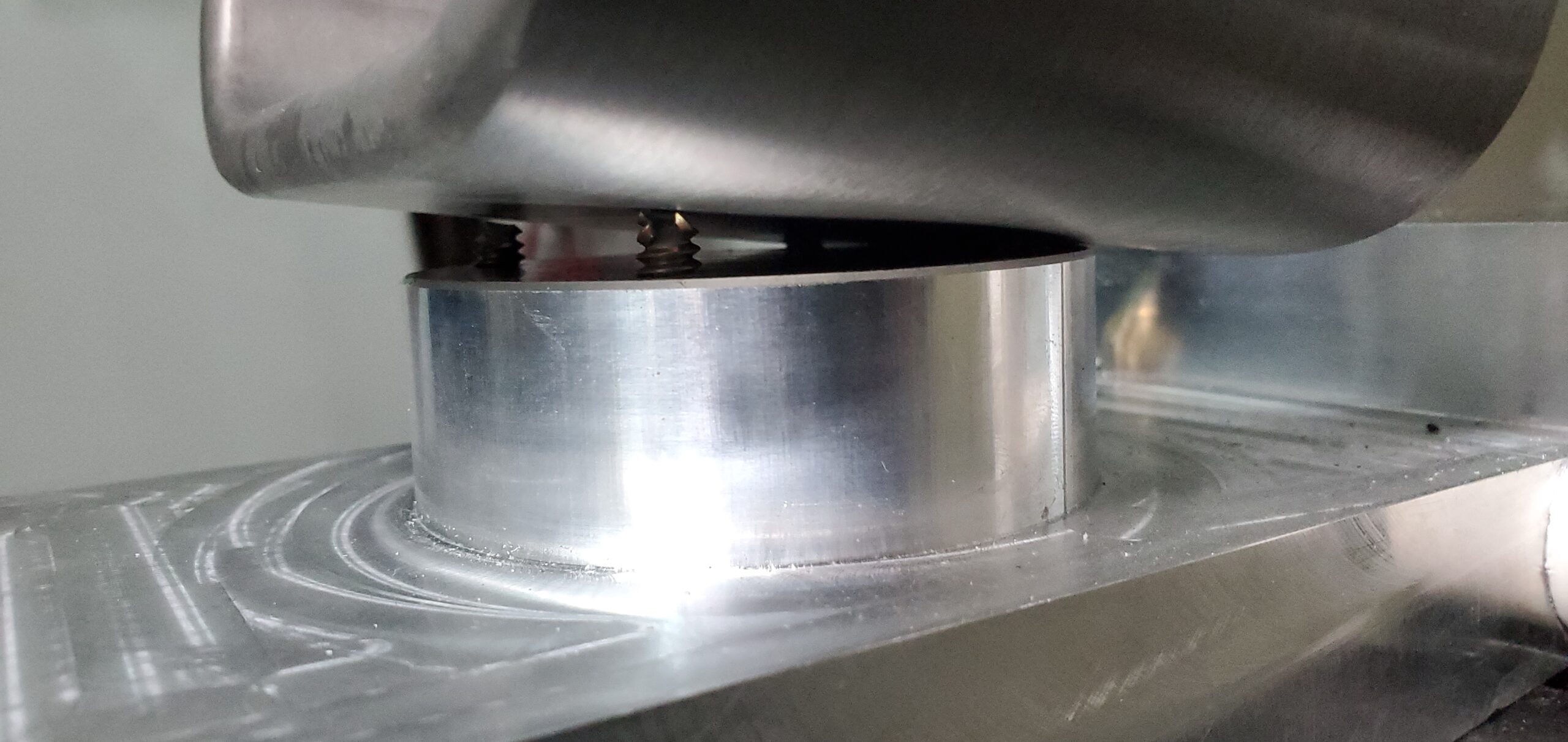
The 0.32″ thick fork deformed quite far and exceeded the displacement I was comfortable pushing my test equipment to. The “Legacy” style fork broke the 1/4″ bolts off before deforming significantly. Looking at the Legacy fork after the test I’d say its still serviceable. . .
Engineering incoming. . .It is important to note that the area under each curve is representative of the energy dissipated by the fork. Even without bringing the 0.32″ fork to bolt failure the area under the curve is greater than that of the 0.40″ Legacy fork, and not just slightly, about 20%. The 0.32″ fork is clearly able to absorb more energy before failure while also limiting the maximum loads to around 4000lbs. The Legacy fork is stronger, but because the bolts fail it cannot absorb as much energy, instead it subjects the airframe to a much higher 8000lb load and then shears off. This is not ideal behavior.
This highlights the bolts as one major limitation on increasing the load capacity of the fork design before even considering if the other strut components are capable of handing additional load.
Also notable is that the Legacy fork strength far exceeds the limit load ratings of both the Matco and Beringer wheel options (>150%). . . Its overbuilt even for a Legacy, a load capacity of over 12G doesn’t make a lot of sense on a part which you would prefer to bend before others fail.
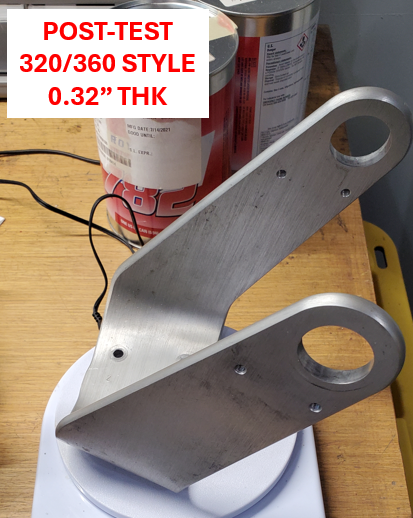
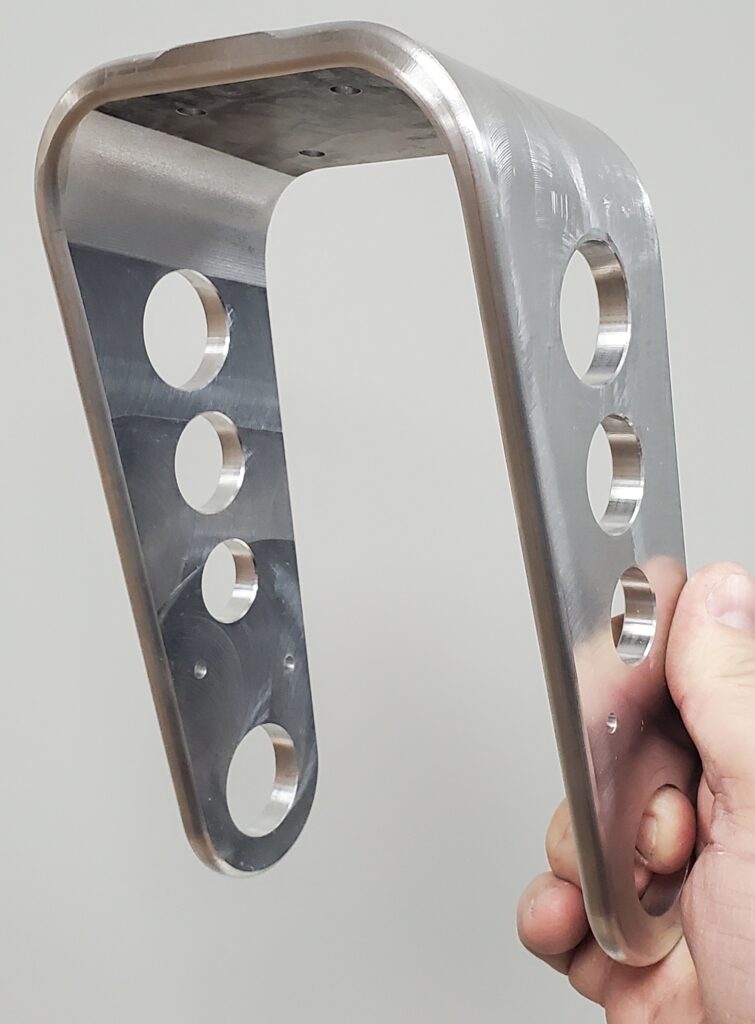
I tested many new designs, first in CAD using FEA, and then on the load test rig. The first designs actually had variable thickness, thicker at the flange area and thinner on the sides, this worked but was too strong, shearing the bolts. I tried to make them weaker by enlarging the lightening holes but the side loading strength of the fork went down. I thought this unacceptable as the shimmy loads are a huge unknown so I went back to a constant thickness and kept trying different lightening techniques. Below is one of the early variable thickness designs with large holes.
I went through over 20 custom made forks perfecting the design and the forming process. This included various heat treating processes with a local vendor, building a unique custom bending machine which evenly distributes the bend strain across the bends, three different tool designs to get the dimensions right, and performing dye penetrant on the bend surface to look for cracking. The resulting forming process is more complex than bending a piece of flat stock on a standard press brake, and far superior.
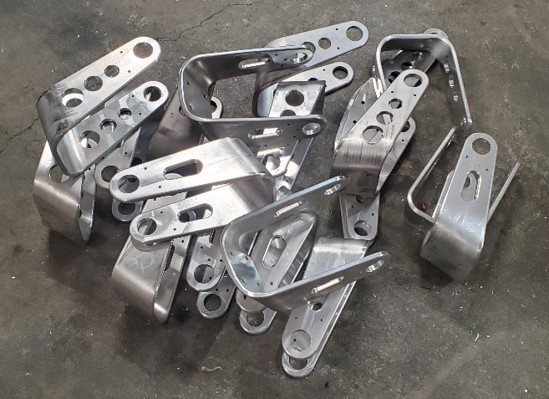
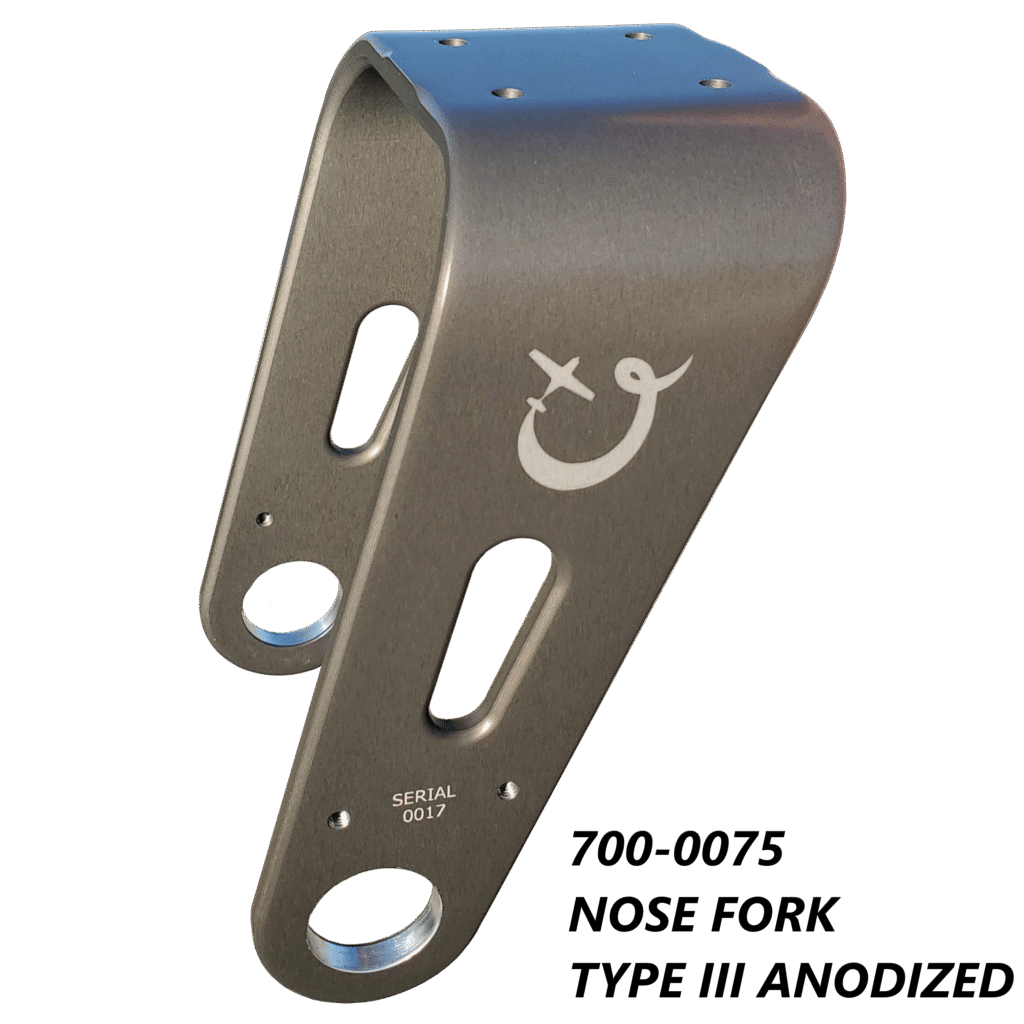
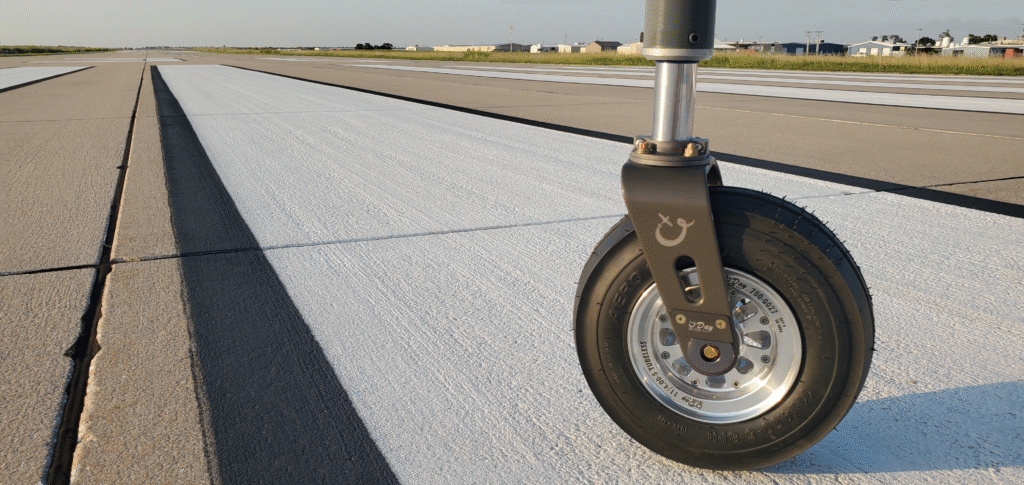
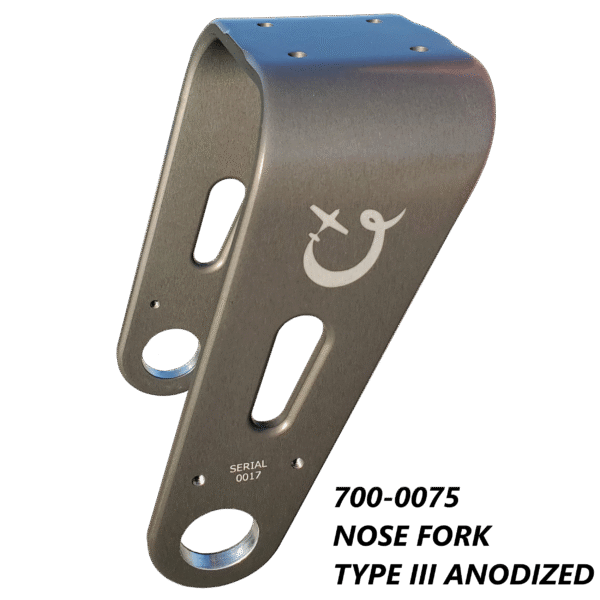
The final design, Part number 700-0075, is close to 0.32″ thick and has a weight reduction slot which I iteratively sized down so not to weaken the strut due to side loads. This fork weighs only 1.30 lb. which is nearly 1 lb. less than the Legacy style forks and slightly less than the original 0.32″ forks.
The vertical load test results can be seen below along with the baseline “stock” fork data.
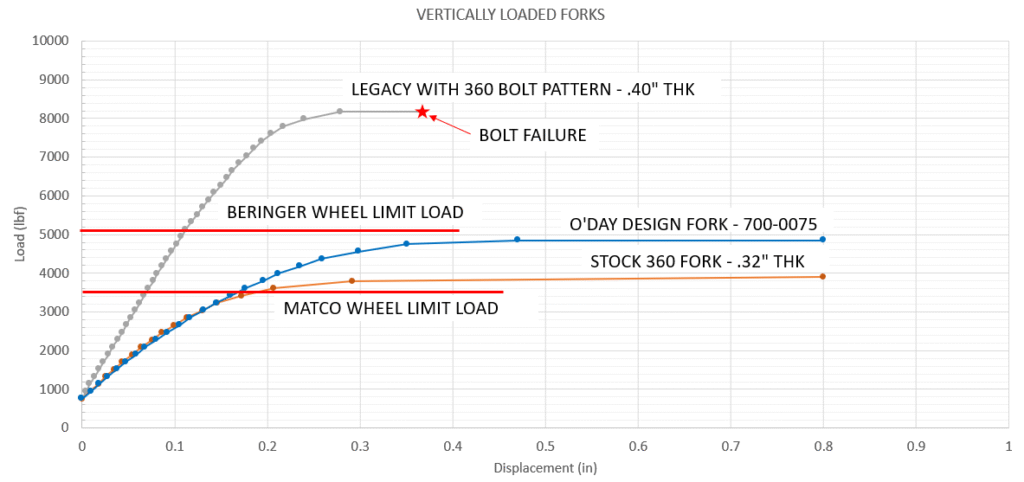
The 700-0075 fork was also tested with grade 8 fasteners, which did not break up to the 0.8″ limitation of my test equipment. I’d expect that since the fork is around 25% stronger that it would not deform as far as the old Lancair 0.32″ fork before the bolts broke, this can be improved by the use of better fasteners (discussed further below).
Its strength is also comparable with the wheel options available.
There are a few reasons why this new fork is stronger than the original despite being lighter and of the same thickness. The first is the shape, the originals were designed to be bent on a press brake so that their bend is 90deg to the shape of the fork in the bend area. The O’Day Design fork sweeps backwards throughout the bend which improves it strength but requires better tooling to manufacture as I have done.
The second difference is the material. The original .32″ forks were made from a non-heat treatable alloy, 5083, this alloy has a lower yield strength as compared to the 6061 alloy used on the Legacy fork and this new design.
This wasn’t the only analysis and testing performed on this design, I also completed FEA in both the vertical and side load conditions as well as a single side load test. The slots were sized fairly small to prevent developing stresses higher that those seen further up on the fork. This writeup is already too long to include all these details, I’d imagine only 10% of readers got this far.
These forks are available now and on the site at a reasonable price. The standard option is Anodized Type III. This is tougher than the original Type II anodize used on the 0.32″ forks which prevents scratches and dents due to rocks and the gear door.
235-320-360 NOSE FORK
Nose Fork For The Lancair 235, 320, and 360.
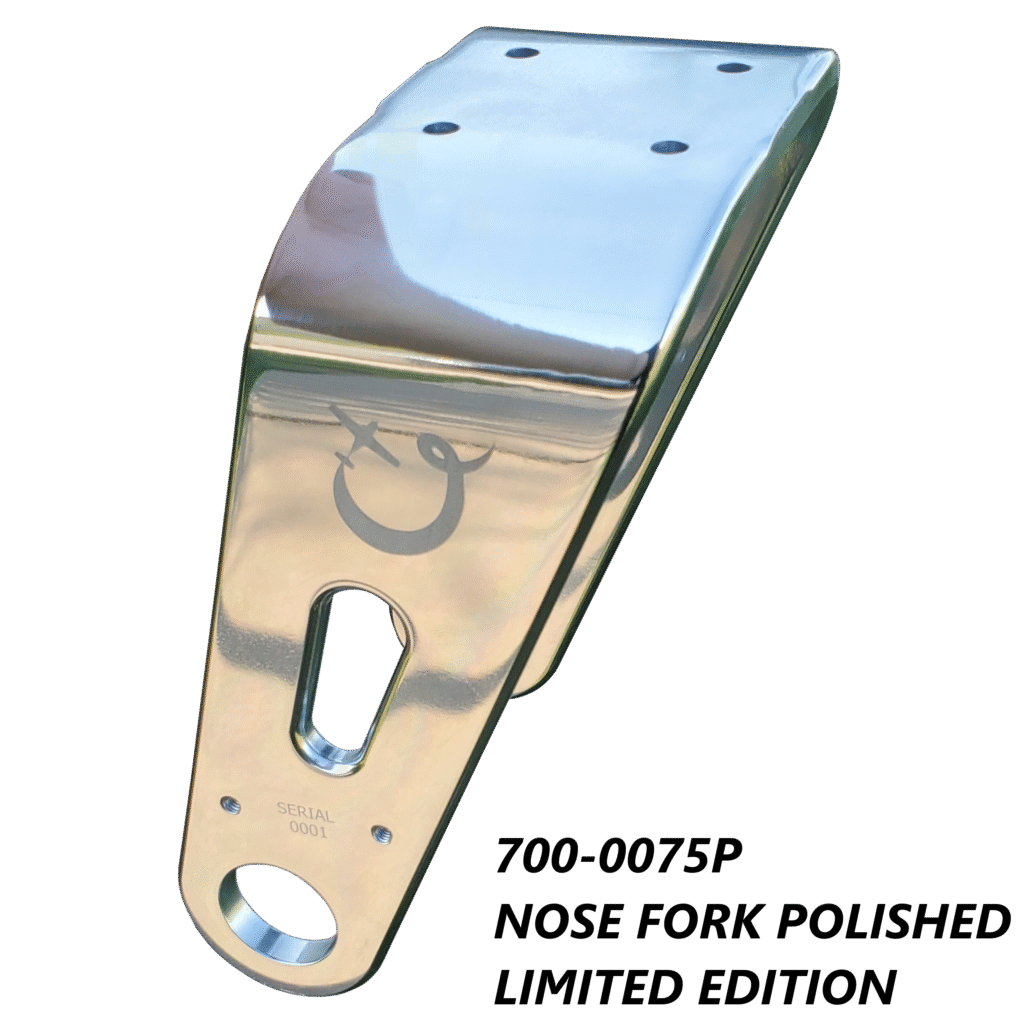
For those who want something really special, there is even a limited edition version which has been polished and then clear cerakoted. There was only 7 made. I’m not certain, but based on how much of a pain it was to make, these limited editions are unlikely to be available again after they are gone.
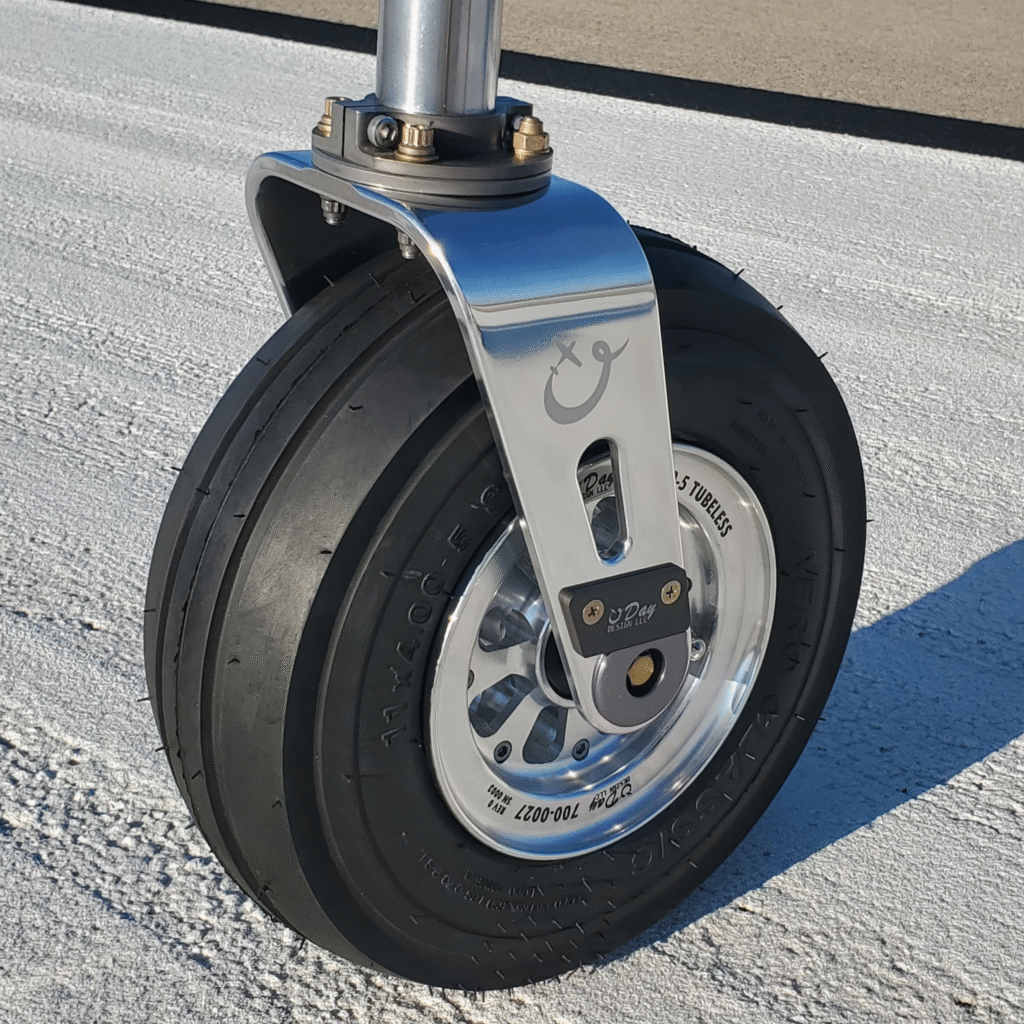
The new nose fork met the design intent going in, slightly stronger than the original .32″ fork but still allows for large distortions before failure of the bolts.
Fasteners
The AN4 fasteners have been shown to be a weak point. Improving this joint is easy, use a higher strength fastener in the front two bolt positions.
O’Day Design has developed a hardware kit to do this, part number 700-0092.
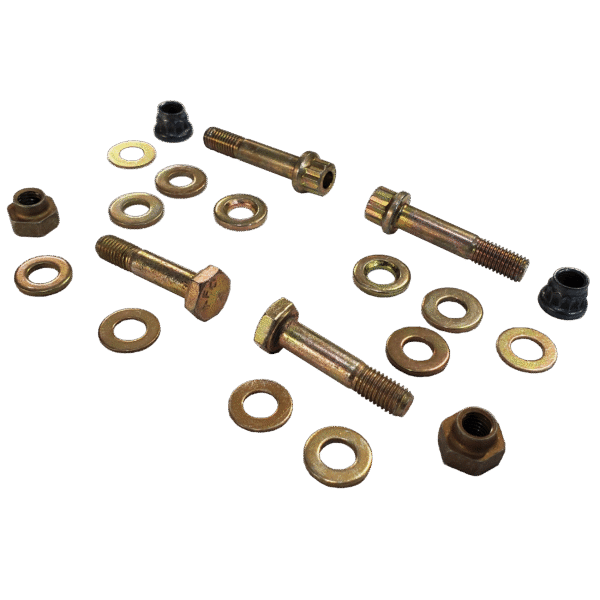
235-320-360 NOSE FORK HARDWARE KIT
Upgraded Nose Fork Hardware Kit For The Lancair 235, 320 & 360.
In stock
This kit comes with new flange hardware including two new MS21250-04 bolts which have a tensile strength of 6980lb (AN4 is only 4080lb). These bolts require MS20002C4 washers under the head and are also included. Length wise the fasteners provided are compatible with 0.32″ thick forks with or without tow plates. If you have a spacer (not recommended) or something unique like a thicker flange fork or different strut clamp then you will need to source your own length bolts. For more information see the product listing.
One other important detail, a nut must be used which is as strong as the bolt. MS21044N4 and MS21045-4 are only rated for 4,580lb, this means they are likely to strip before the MS21250-04 bolt fails. MS21042-4 is better but will still strip before the bolt. The best is NAS1804-4 or H20-4 which can take axial loads that exceed that of the bolt. This upgraded nut is also included with kit 700-0092.
There is nothing special about the components in the kit, one can source themselves, however they can be prohibitively expensive to put together one-off by the owner which is why this kit has been created.
Hoop and Retaining Plates
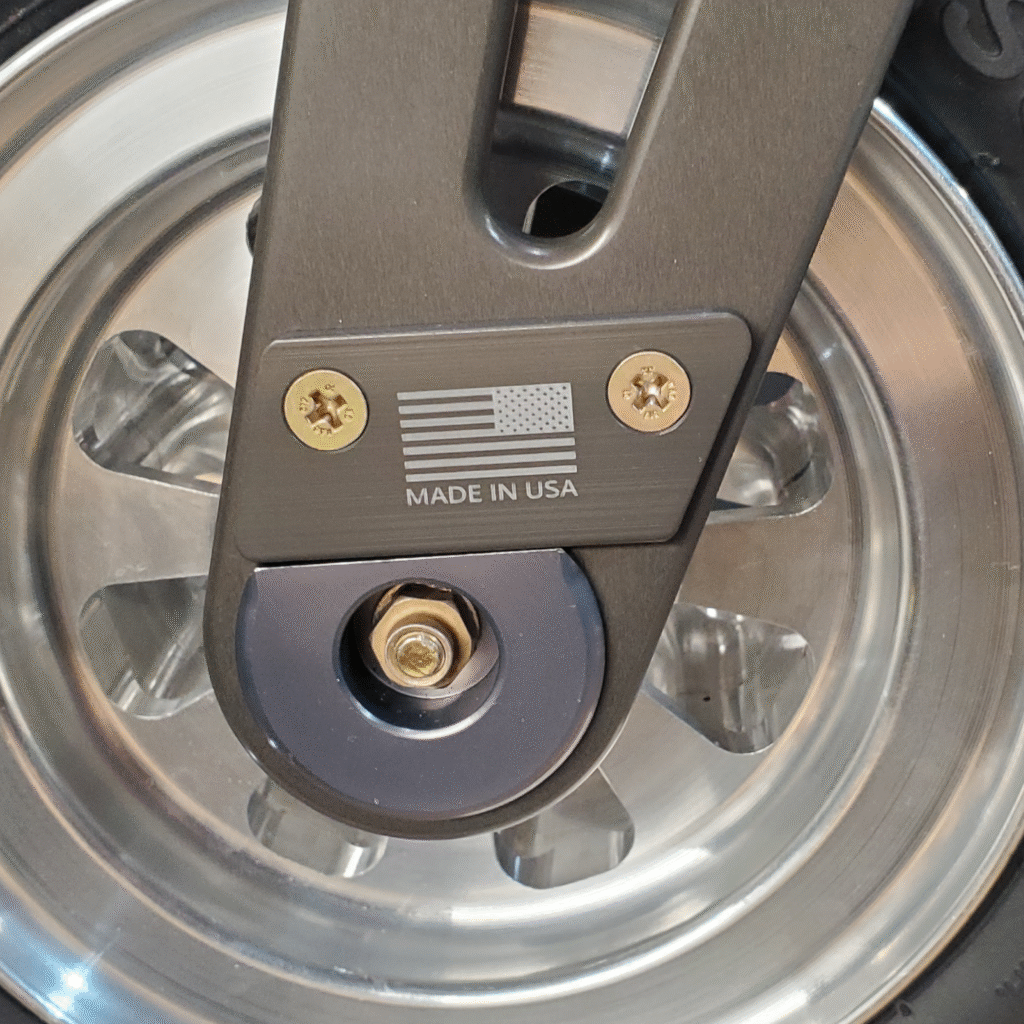
In addition to the forks I’m offering all the axle components including the Hoops and retaining plates (for aircraft equipped with self centering). These differ from the originals in that they are designed to work with the later type axle bushing end with the larger flat. They are also Type III anodized which prevents them from being galled and scratched by the door, particuarly nice with the hoop application. These use high strength countersunk screws to prevent hang-ups in the gear well, these must be blue thread-locked in.
The retaining plates are also compatible with the Lancair Legacy and look much nicer then the originals. Both Hoop and Retaining Plate designs should be compatible with Beringer axles but I have not verified.
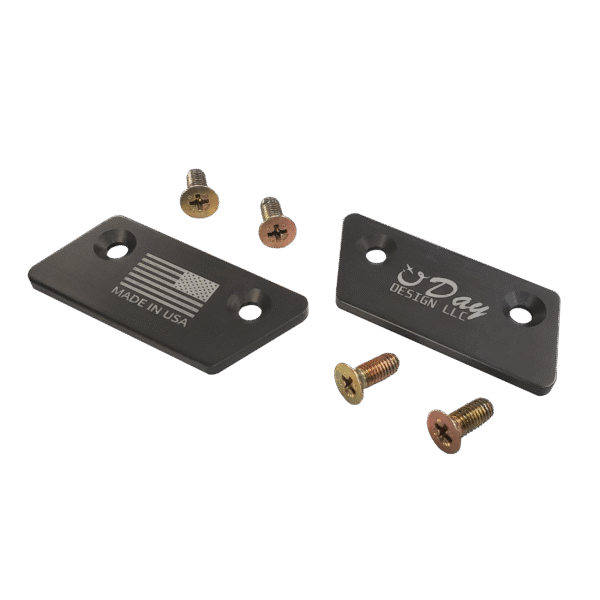
AXLE RETAINERS 235-320-360-LEGACY
Nose Fork Axle Keeper For The Lancair 235, 320, 360, and Legacy.
In stock
Axle Assembly
The nose axle assembly is a common pain point on these planes. Often the bearings get loose and starts spinning which wears the parts out and makes the problem worse. This is caused by a few factors including:
- Adjusting The Bearing Preload Too Light. This is common because the bearing seal friction is so high.
- Incorrect Washer Stackup Under Bolt. This also leads to no bearing preload. There are huge variations in the wheel width so one hardware stackup does not work for all planes.
- Loose Tolerance Parts. The original axles were made from standard 4130 tubing and then cad plated, they do not have a close fit tolerance, this allows the bearing to shift around on the shaft. Similarly, the original GM38 axle bushing (end cap) also had a loose tolerance on its diameters, this allows the entire axle assembly to rock back and forth under load.
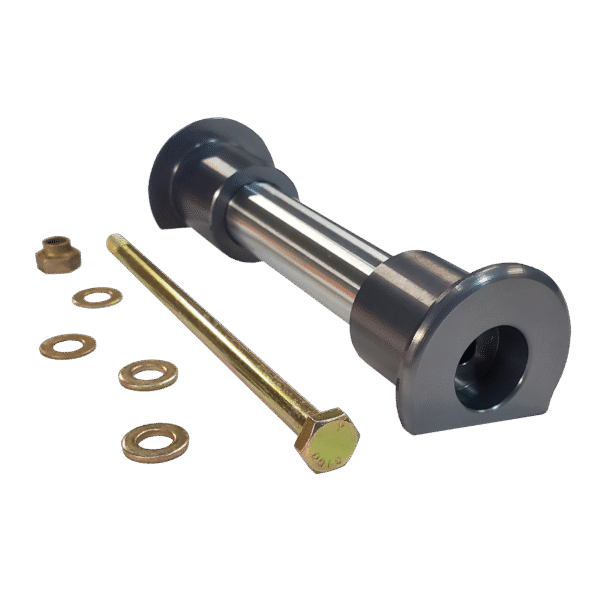
The new 700-0088 (GM25 / Z02E276) axles are hardened and ground to a close fit with the bearings, they are also chrome plated on the bearing surface, this prevents wear of the surface over time. These is also a very close fit inside the 700-0068 (GM38) axle bushing which in tern fits closely with the fork axle holes. The new axle plugs are made from 7075 aluminum which is harder and stronger than the original 6061 aluminum plugs supplied by Lancair, this helps with wear and damage due to tow bars. The improved fits are obvious when assembling all these new parts with the new fork.
These axle assemblies are compatible with 235, 320, 360, and Legacy models. They are only compatible with Matco (Not Beringer) wheels. Since I’ve found so much variation in the original Lancair parts these axles are only available as a kit, part number 700-0090.
GM38 & GM25 / Z02E276 AXLE ASSEMBLY
Axle Assembly For The Lancair 235, 320, 360 & Legacy.
In stock
What’s Next?
There are two more forks used on Lancair aircraft, one for the Legacy and other one for the ES/IV/IV-P. The manufacture process can be adapted to these designs, I’m in the process of developing these and hope to have them available shortly as well.
Hey Shane, great review and progress on your forks, axles, and hoops products! They look absolutely stunning. Thank you for the historical background and also the graphics showing nominal test data. Agree with your comments regarding Grade 8 bolts. I’m reading this article in my hangar whilst looking at the newly installed strut and GM 26 – clearly after I get the plane fully assembled and tested I will be knocking on your door for a nose fork!
Very best regards
Pat
(… One of the 10% readers!)
Thank you Pat!
Another of your 10% readers here 🙂
Q: Did you test some Beringer and Matco wheels to failure?
Or is that load limit line from their literature?
These parts are beautiful and serve a valuable purpose. Well done, sir!
Thank you Bob! The wheel data is from the manufacturers, I look forward to testing that as well though!